


Bigtargetmedia.com – Blogging has evolved into a highly competitive digital publishing industry. Thousands of articles appear online every hour, and search engines evaluate each piece of content based on relevance, quality, structure, and user engagement. Bloggers who want consistent traffic must produce well-researched, SEO-optimized content regularly.
This challenge explains why many creators rely on AI tools for blogging automation. Artificial intelligence helps bloggers automate tasks such as topic research, article outlining, SEO optimization, editing, and even publishing workflows. Instead of performing each step manually, bloggers can use intelligent systems that accelerate content production.
Think of blogging automation as building a content production engine. Without automation, a blogger works like a single craftsman, creating articles one at a time. With AI-powered systems, that same blogger operates more like a digital newsroom that generates ideas, drafts content, and optimizes articles continuously.
When bloggers integrate the right tools, they can maintain consistent publishing schedules, analyze search trends quickly, and scale their websites efficiently. Understanding how AI tools for blogging automation work, therefore o, re becomes essential for anyone who wants to grow a modern blog.
Why Blogging Automation Matters in Modern SEO
The Increasing Demand for High-Quality Content
Search engines reward websites that publish useful and well-structured content consistently. However, writing long-form articles requires time, research, and editing.
A blogger who wants to publish four articles per week must perform several tasks repeatedly. These tasks include keyword research, outline creation, writing, editing, formatting, and SEO optimization.
Artificial intelligence simplifies these tasks by automating repetitive workflows. Instead of researching keywords manually or writing outlines from scratch, bloggers can rely on AI platforms that generate structured content suggestions.
When bloggers use AI tools for blogging automation, they transform a time-consuming process into a streamlined workflow.
Automation Helps Bloggers Scale Content Production
Scaling a blog means publishing more articles without sacrificing quality. However, producing content at scale often overwhelms individual creators.
Automation solves this challenge by allowing AI systems to assist with research, drafting, and optimization.
For example, a blogger who manages several niche websites may use AI tools to generate topic ideas, analyze search trends, and create first drafts. The blogger then edits and refines the content before publishing.
This approach allows a single person to manage multiple content streams simultaneously. As a result, automation plays a central role in modern blogging strategies.
AI Tools That Generate Blog Content Automatically
Jasper AI for Blogging Automation

Jasper AI has become one of the most popular tools for automated content creation. The platform uses advanced natural language processing to generate structured blog drafts, headlines, and introductions.
A blogger can start by entering a topic prompt such as “digital marketing automation strategies.” Jasper analyzes the prompt and produces an article outline that includes headings, subtopics, and content ideas.
The system can then generate paragraphs that follow the outline structure. This capability significantly reduces the time required to produce a first draft.
However, effective bloggers do not rely entirely on automation. Instead, they treat AI as a collaborative writing partner. After generating a draft, they refine the content, add examples, and adjust the tone to match their audience.
Because of its flexibility and speed, Jasper remains one of the most widely used AI tools for blogging automation among professional bloggers.
Copy.ai for Automated Blog Drafting

Copy.ai provides another powerful solution for automated blog writing. The platform focuses on generating marketing content, blog outlines, and article sections quickly.
When bloggers enter a topic into Copy.ai, the platform generates multiple variations of blog introductions and content structures. These variations allow writers to choose the direction that best matches their editorial goals.
For example, a technology blogger researching AI software may generate several outline versions. One outline may focus on beginner tutorials, while another emphasizes advanced automation strategies.
This flexibility helps bloggers experiment with different article angles before committing to a final structure.
Because of its ability to produce diverse content variations, Copy.ai stands among the most versatile AI tools for blogging automation for content ideation and drafting.
AI Tools That Automate Keyword Research and SEO
SEMrush AI Keyword Research
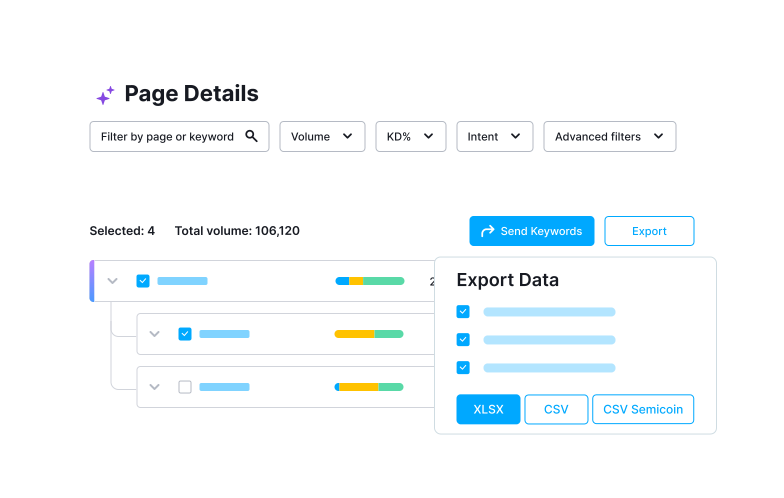
Successful blogging depends heavily on keyword research. Without targeting the right search queries, even high-quality articles may struggle to attract traffic.
SEMrush uses artificial intelligence to analyze search trends, evaluate keyword difficulty, and identify content opportunities.
When bloggers explore keywords using SEMrush, the platform generates keyword clusters that represent broader topic groups. These clusters help bloggers build comprehensive content strategies rather than focusing on isolated keywords.
For example, a blogger researching automation software may discover related topics such as marketing automation, workflow automation, and blogging automation tools.
These insights help bloggers plan interconnected articles that strengthen topical authority.
Because keyword research forms the foundation of SEO, SEMrush remains one of the most essential AI tools for blogging automation for traffic growth.
Surfer SEO for Content Optimization

Writing a blog article represents only the first step in the SEO process. The content must also align with search engine expectations.
Surfer SEO analyzes top-ranking pages and identifies patterns that influence search visibility. The platform evaluates factors such as keyword usage, article length, heading structure, and semantic relevance.
When bloggers optimize their articles using Surfer, the platform provides real-time suggestions that improve ranking potential.
For instance, Surfer may recommend additional related keywords or suggest expanding specific sections to increase topical depth.
These insights allow bloggers to refine their content strategically rather than relying on guesswork.
Because it connects writing with SEO optimization, Surfer stands among the most practical AI tools for blogging automation for search performance improvement.
AI Tools That Automate Editing and Content Quality
Grammarly AI Writing Assistant

Even well-researched articles require careful editing. Grammar mistakes, unclear sentences, and awkward phrasing can reduce content quality and reader engagement.
Grammarly provides an AI-powered editing assistant that evaluates writing clarity, grammar accuracy, and tone consistency.
As bloggers write or edit articles, Grammarly highlights potential improvements and suggests revisions that enhance readability.
For example, the platform may recommend replacing passive voice with active voice or simplifying overly complex sentences.
These improvements help bloggers maintain professional writing standards while reducing editing time.
Because content quality strongly influences user experience, Grammarly plays an important role among AI tools for blogging automation that support high editorial standards.
Creating a Complete Blogging Automation Workflow
Successful blogging automation involves combining several tools into a unified workflow rather than relying on a single platform.
A typical automated blogging system begins with keyword research using tools such as SEMrush. This step identifies search opportunities and helps bloggers plan content topics.
Next, content creation tools such as Jasper AI or Copy.ai generate article outlines and initial drafts. These drafts provide the foundation for the final article.
Once the draft exists, optimization platforms such as Surfer SEO analyze the content and recommend improvements for search performance.
Finally, editing tools such as Grammarly refine the article’s clarity and readability before publication.
Through this workflow, bloggers create a structured system that handles research, writing, optimization, and editing efficiently.
When implemented correctly, AI tools for blogging automation allow bloggers to focus on strategy and creativity rather than repetitive tasks.
The Future of Blogging Automation
Artificial intelligence will continue transforming how bloggers create and manage content. Future AI platforms may integrate research, writing, optimization, and publishing into a single automated ecosystem.
For example, advanced systems may analyze trending topics, generate article drafts, optimize SEO automatically, and schedule publication without manual intervention.
These innovations will allow bloggers to produce large volumes of content while maintaining high quality.
However, automation does not replace creativity. Successful bloggers still provide unique perspectives, storytelling, and expertise that AI cannot replicate fully.
The most effective strategy combines human creativity with intelligent automation tools.
Conclusion
Blogging success requires consistent content creation, strong SEO strategies, and high editorial quality. Managing all these tasks manually can slow growth and limit productivity.
Artificial intelligence simplifies the process by automating research, drafting, optimization, and editing. Platforms such as Jasper AI, Copy.ai, SEMrush, Surfer SEO, and Grammarly demonstrate how technology can support every stage of the blogging workflow.
For bloggers who want to scale their websites efficiently, adopting AI tools for blogging automation offers a powerful advantage. These tools transform blogging into a streamlined production system that generates high-quality content, attracts search traffic, and supports long-term digital growth.
