


bigtargetmedia.com – Business-to-business marketing has undergone a significant transformation as buying processes become more complex and decision-making units expand. Traditional lead-based approaches, which focus on generating high volumes of prospects, have gradually been complemented by more targeted methodologies. One of the most prominent of these approaches involves the work of account-based marketing companies, organizations that specialize in aligning marketing efforts with specific high-value accounts rather than broad audiences.
Account-based marketing companies operate at the intersection of sales strategy, data analytics, and personalized communication. Their role is not limited to campaign execution but extends to account selection, stakeholder mapping, and long-term relationship building. This shift reflects how B2B growth increasingly depends on relevance, timing, and coordination rather than scale alone.
Understanding account-based marketing companies requires examining both the strategic logic behind account-based marketing and the operational frameworks used to implement it. This article explores how these companies function, the benefits they provide, the risks they navigate, and the real-world contexts in which their services are applied.
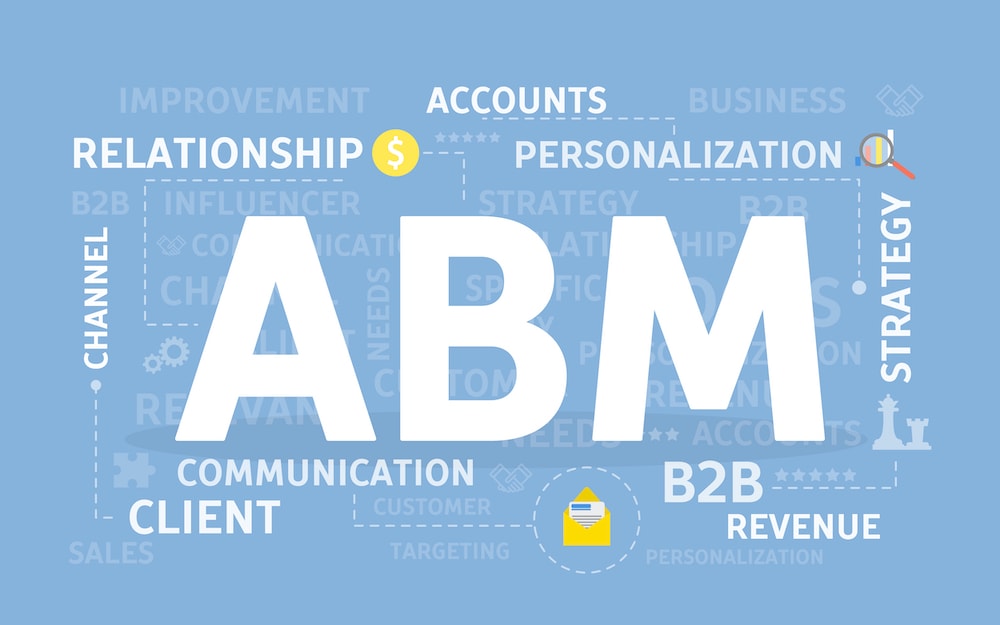
Image caption:
This visual represents account-based marketing companies coordinating targeted campaigns for specific B2B accounts.
Understanding Account-Based Marketing Companies
Account-based marketing companies are organizations that help businesses design and execute marketing strategies focused on specific target accounts. Instead of treating all prospects equally, these companies prioritize a defined list of organizations that are considered strategically important. Marketing activities are then tailored to the needs, challenges, and structures of those accounts.
The foundation of this approach lies in alignment. Account-based marketing companies work to synchronize marketing and sales efforts so that both functions pursue the same account objectives. Messaging, content, and outreach are coordinated to ensure consistency across touchpoints.
These companies often operate within B2B environments where purchase decisions involve multiple stakeholders. By identifying decision-makers and influencers within target accounts, account-based marketing companies enable more precise and relevant engagement.
How Account-Based Marketing Models Differ From Traditional Approaches
Traditional B2B marketing often emphasizes funnel volume, focusing on attracting as many leads as possible and qualifying them over time. In contrast, account-based marketing reverses this logic by starting with predefined accounts and building engagement outward.
Account-based marketing companies structure campaigns around account intelligence rather than demographic generalizations. Insights such as organizational structure, industry challenges, and buying cycles inform content and channel selection.
This difference affects measurement as well. Success is evaluated based on account engagement, relationship depth, and progression rather than lead counts alone. The shift in metrics reflects a broader change in how value is defined in B2B marketing.
Core Services Provided by Account-Based Marketing Companies
Account-based marketing companies typically offer a combination of strategic and executional services. Account identification and segmentation form the initial phase, where data analysis determines which accounts align with business objectives.
Content personalization is another core service. Messaging is adapted to resonate with specific industries, roles, or organizational priorities. This personalization may involve tailored whitepapers, case studies, or digital experiences.
Campaign orchestration and analytics complete the service spectrum. Account-based marketing companies manage multi-channel engagement and monitor performance across touchpoints. Insights from analytics inform ongoing optimization and strategic adjustments.
Benefits and Broader Implications
One of the primary benefits of account-based marketing companies is improved relevance. By focusing on a defined set of accounts, marketing efforts are more closely aligned with actual business opportunities. This relevance can enhance engagement quality and reduce wasted resources.
Another advantage lies in sales and marketing alignment. Account-based approaches encourage collaboration between teams, reducing friction and improving communication. Shared objectives create a more cohesive go-to-market strategy.
On a broader level, account-based marketing companies contribute to the professionalization of B2B marketing. Their methodologies emphasize data-driven decision-making, long-term planning, and relationship-centric thinking, influencing industry standards.
Strategic Impact on B2B Organizations
The involvement of account-based marketing companies often changes how organizations view growth. Rather than pursuing expansion through volume, attention shifts toward account depth and lifetime value.
This strategic orientation supports more predictable revenue models. By nurturing key accounts over time, businesses may experience more stable pipelines and reduced dependency on constant lead generation.
Culturally, account-based approaches encourage patience and precision. Marketing success becomes associated with insight and coordination rather than sheer activity levels.
Risks, Challenges, and Considerations
Despite their advantages, account-based marketing companies face several challenges. One common risk involves account selection. Focusing on the wrong accounts can limit growth potential and misallocate resources.
Resource intensity is another consideration. Account-based marketing requires significant investment in research, content, and coordination. Smaller organizations may find these demands challenging without clear prioritization.
Measurement complexity also arises. Tracking the influence of marketing activities on account progression can be difficult, particularly when sales cycles are long and involve multiple interactions.
Organizational and Operational Challenges
Successful collaboration between marketing and sales is essential, yet not always easy to achieve. Misalignment in priorities or communication can undermine account-based initiatives.
Data quality presents another operational challenge. Account-based marketing relies on accurate and current information. Incomplete or outdated data can reduce effectiveness and personalization accuracy.
Scalability is also a concern. While account-based marketing excels in targeted contexts, expanding programs to cover larger account lists requires careful planning and automation.
Real Product or Service Examples
Demandbase Services
Image caption:
Demandbase supports account-based marketing companies with data-driven targeting and analytics tools.
Demandbase provides platforms that enable account identification, engagement tracking, and performance analysis. Its tools are commonly used by account-based marketing companies to support strategic execution.
The platform illustrates how technology underpins modern account-based methodologies.
Terminus Campaign Solutions
Image caption:
Terminus exemplifies account-based marketing platforms used for coordinated B2B campaigns.
Terminus focuses on multi-channel engagement across advertising, email, and web personalization. Account-based marketing companies leverage such platforms to orchestrate consistent messaging.
This example highlights the role of orchestration in account-based strategies.
6sense ABM Insights

Image caption:
Predictive analytics platforms support account-based marketing companies with intent data.
6sense uses intent signals and predictive analytics to identify accounts in active buying stages. These insights inform targeting and timing decisions.
The integration of analytics demonstrates how data enhances account relevance.
RollWorks Advertising Solutions

Image caption:
RollWorks provides advertising solutions aligned with account-based marketing strategies.
RollWorks focuses on account-based advertising and measurement. Its services help account-based marketing companies align ad delivery with account priorities.
This example reflects the convergence of advertising and account-based thinking.
Use Cases and Real-World Scenarios
In enterprise technology sectors, account-based marketing companies often support long sales cycles involving multiple stakeholders. Targeted content and engagement help maintain visibility throughout the decision process.
Professional services firms use account-based approaches to pursue strategic clients. Customized messaging demonstrates understanding of client challenges and industry context.
In manufacturing and industrial markets, account-based marketing supports relationship-driven sales models. Engagement focuses on trust-building and long-term collaboration rather than immediate conversion.
Frequently Asked Questions
What do account-based marketing companies do?
They help businesses design and execute marketing strategies focused on specific high-value accounts rather than broad audiences.
How are account-based marketing companies different from traditional agencies?
They prioritize account selection, personalization, and sales alignment instead of lead volume and generic campaigns.
Are account-based marketing companies only for large enterprises?
While commonly used by larger organizations, account-based approaches can be adapted for smaller B2B firms with focused account lists.
How is success measured in account-based marketing?
Metrics often include account engagement, pipeline influence, and relationship progression rather than lead counts.
What industries benefit most from account-based marketing companies?
Industries with complex sales cycles, high deal values, and multiple decision-makers often see the most benefit.
Neutral Conclusion
Account-based marketing companies play an increasingly important role in modern B2B strategies by shifting focus from volume-driven tactics to targeted, relationship-oriented engagement. Their methodologies reflect broader changes in how organizations approach growth, emphasizing relevance, alignment, and long-term value.
While challenges related to resource intensity, data quality, and measurement remain, the strategic contributions of account-based marketing companies continue to influence B2B marketing practices. Understanding their role provides valuable insight into how precision and coordination shape contemporary business development in competitive markets.
