


Every successful SEO strategy begins with one critical skill: keyword research. Search engines rely on keywords to understand what a page discusses and when it should appear in search results. If you target the wrong keywords, even well-written content struggles to rank.
That is why professionals constantly rely on the best keyword research tools for SEO. These tools reveal what people search for, how often they search, and how difficult it is to compete for those queries. Without them, keyword research becomes guesswork.
Imagine trying to fish in the ocean without knowing where the fish gather. You might spend hours casting your net without catching anything. Keyword research tools act like sonar systems for SEO. They show exactly where the opportunities exist.
When beginners and professionals use the best keyword research tools for SEO, they gain three powerful advantages. They identify real search demand, analyze competition accurately, and discover long-tail opportunities that competitors often ignore.
This guide explains the most effective keyword research tools used in modern SEO and how each tool helps build a stronger content strategy.
Why Keyword Research Tools Are Essential for SEO Success
Keyword research determines whether your content reaches the right audience. Search engines process billions of queries every day, but only a small percentage of those searches match the topics many websites publish.
Without research tools, content creators often rely on intuition. Unfortunately, intuition rarely aligns with real search behavior.
How Keyword Research Tools Reveal Search Demand
Keyword research tools collect data directly from search engines. They analyze search volume, user behavior, and keyword variations. That information helps SEO professionals understand what people actually type into search bars.
For example, someone may assume people search for “cheap travel.” A keyword tool may reveal that “budget travel tips for beginners” receives far more searches and faces lower competition.
This difference dramatically affects SEO outcomes. By targeting the right phrases, websites attract more organic traffic without increasing content production.
When used correctly, the best keyword research tools for SEO transform raw search data into actionable insights that guide content creation.
The Role of Keyword Difficulty and Competition Analysis
Search demand alone does not guarantee ranking opportunities. Many high-volume keywords also attract heavy competition from authoritative websites.
Keyword tools measure competition levels using metrics such as keyword difficulty, domain authority, and backlink strength. These indicators help SEO professionals choose realistic targets.
For example, a new website may struggle to rank for “digital marketing.” However, the phrase “digital marketing strategy for small restaurants” may offer a far more achievable opportunity.
By analyzing both demand and competition, keyword research tools allow websites to grow strategically instead of randomly.
Google Keyword Planner: A Foundational Tool for Keyword Discovery
Understanding Search Volume Through Google Data

Google Keyword Planner remains one of the most reliable data sources because it gathers information directly from Google search activity. Although the platform originally served advertisers, SEO professionals also rely on it for keyword discovery.
Users can enter a topic, product name, or website URL to generate related keyword ideas. Each suggestion includes estimated search volume and competition levels.
For example, a user searching for travel keywords might enter “family vacation.” Keyword Planner then generates related phrases such as “family vacation ideas,” “cheap family vacations,” and “family vacation packages.”
These insights help SEO professionals expand their content strategy with keywords that align with real user searches.
Using Keyword Planner to Discover Long-Tail Opportunities
Long-tail keywords represent highly specific search queries that often contain three or more words. Although each phrase may generate lower search volume individually, long-tail keywords collectively drive significant traffic.
Keyword Planner excels at identifying these opportunities. By exploring suggested keywords, users often uncover dozens of long-tail variations that competitors overlook.
When beginners combine this data with strategic content planning, they gain access to many realistic ranking opportunities.
Ahrefs Keywords Explorer: Deep Competitive Keyword Intelligence
How Ahrefs Reveals Ranking Opportunities
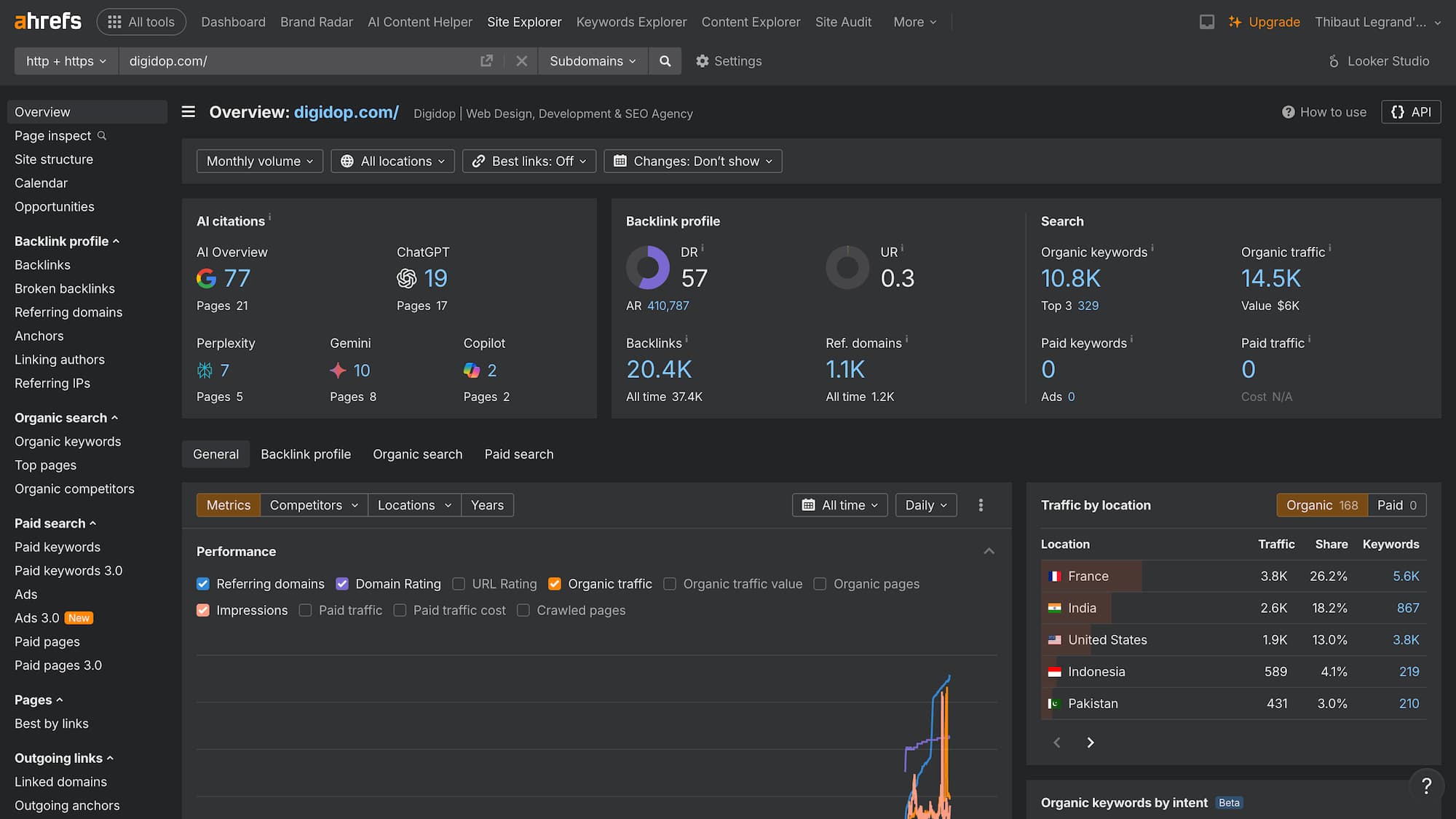
Ahrefs has become one of the most powerful platforms for keyword research. The tool analyzes search results and backlink profiles to determine ranking difficulty.
When users enter a keyword, Ahrefs generates a detailed report that includes search volume, keyword difficulty, traffic potential, and click metrics. This information reveals whether ranking for that keyword is realistic.
The platform also analyzes the pages currently ranking for the keyword. Users can evaluate domain authority, backlink counts, and content length.
This competitive intelligence helps SEO professionals understand what level of optimization is required to compete effectively.
Exploring Keyword Variations and Content Ideas
Ahrefs also provides thousands of related keyword suggestions categorized into different groups. These groups include phrase matches, questions, and related terms.
For example, searching for “home workout” may reveal variations such as “home workout without equipment,” “beginner home workout routine,” and “30 minute home workout plan.”
These variations allow content creators to develop topic clusters that strengthen topical authority.
Because of its depth and reliability, many professionals consider Ahrefs one of the best keyword research tools for SEO.
SEMrush Keyword Magic Tool: Expanding Keyword Databases at Scale
Massive Keyword Databases for Topic Exploration
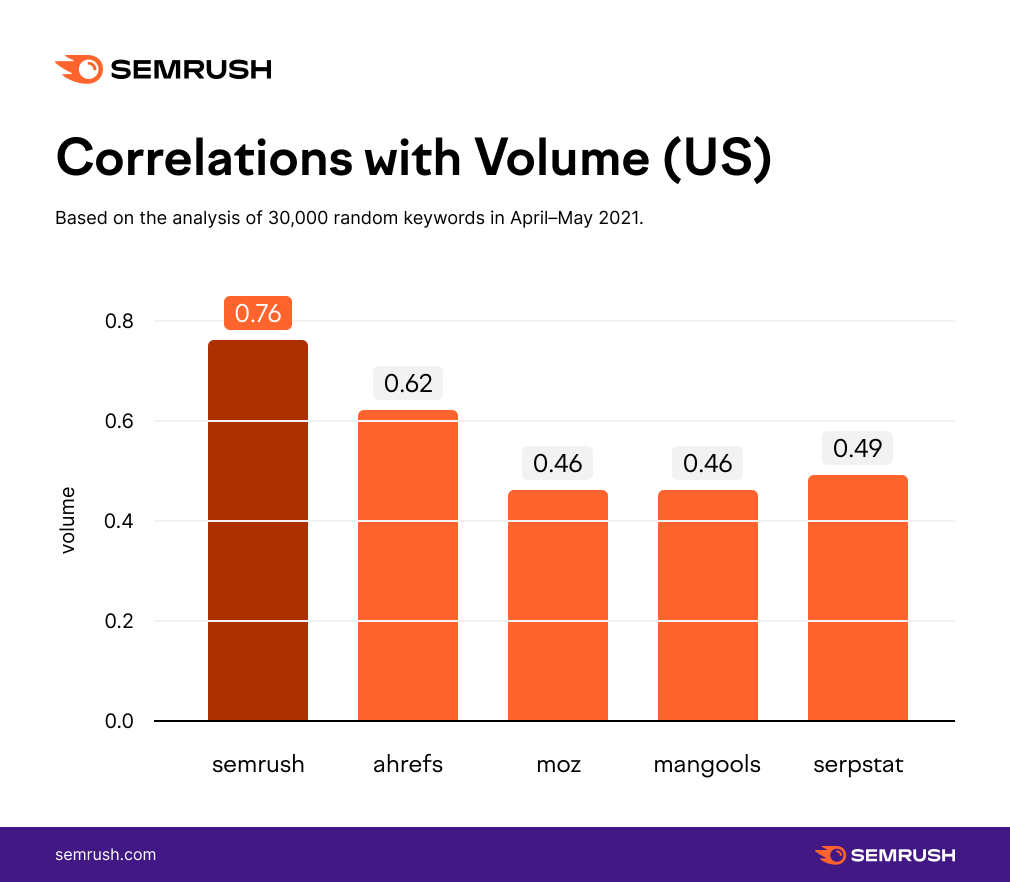
SEMrush offers an extensive keyword database that allows users to explore search topics at large scale. Its Keyword Magic Tool organizes keyword suggestions into structured groups that simplify topic discovery.
When users enter a broad keyword, the tool generates thousands of variations sorted by themes. This structure helps SEO professionals quickly identify content clusters.
For example, a search for “healthy recipes” might reveal clusters such as “healthy breakfast recipes,” “healthy dinner recipes,” and “healthy meal prep recipes.”
These clusters support content planning strategies that target entire topics instead of isolated keywords.
Analyzing Competitor Keyword Strategies
SEMrush also excels at competitor research. Users can enter a competitor’s domain and view the keywords driving their organic traffic.
This feature reveals gaps and opportunities. If a competitor ranks for valuable keywords that your website has not targeted yet, those keywords become immediate opportunities.
By analyzing competitor data alongside keyword metrics, SEO professionals refine their strategies and focus on keywords with realistic ranking potential.
Ubersuggest: Beginner-Friendly Keyword Insights
Simplifying Keyword Research for New SEO Learners

Ubersuggest simplifies keyword research by presenting complex SEO data through a clear and beginner-friendly interface.
After entering a keyword, the tool displays search volume, SEO difficulty, paid difficulty, and cost-per-click data. It also suggests keyword variations and related questions.
Beginners benefit from the simplicity of this interface because it removes much of the complexity associated with advanced SEO tools.
The tool also shows the top pages ranking for each keyword. By studying these pages, users gain insight into the type of content that search engines favor.
For many beginners, Ubersuggest acts as a bridge between basic keyword research and advanced SEO strategy.
Discovering Content Ideas Based on Real Search Trends
Ubersuggest also includes a content ideas feature. This section highlights popular articles related to a keyword and displays estimated social shares and backlinks.
By studying these successful articles, content creators learn what topics resonate with audiences.
This insight helps users create content that aligns with both search demand and reader interest.
AnswerThePublic: Understanding Real Search Questions
Visualizing Search Intent Through Questions
AnswerThePublic focuses on one critical aspect of SEO: search intent. The tool collects real search queries and organizes them into question-based keywords.
Instead of showing only keyword variations, the platform reveals questions users ask around a topic.
For example, entering “SEO tools” may generate questions such as “which SEO tools are best for beginners” or “how do SEO tools improve rankings.”
These questions represent valuable content opportunities. Articles that answer real user questions often attract strong organic traffic.
Turning Search Questions Into Content Topics
When SEO professionals analyze these questions, they gain direct insight into audience curiosity. Each question can become a blog post, FAQ section, or video topic.
This approach aligns content creation with genuine search behavior rather than assumptions.
Because it focuses on search intent, AnswerThePublic complements other tools and strengthens keyword strategies.
Building a Complete Keyword Research Workflow
Effective SEO rarely depends on a single tool. Professionals often combine several tools to gather deeper insights.
A practical workflow might begin with brainstorming broad topics using AnswerThePublic. These topics reveal real user questions and interests.
Next, tools like Google Keyword Planner or Ubersuggest help identify search volume and keyword variations.
Advanced tools such as Ahrefs or SEMrush then analyze competition and reveal the strength of existing ranking pages.
This layered approach transforms keyword research into a structured strategy rather than random experimentation.
If you want to understand the foundational tools that help beginners begin their SEO journey, you can also explore this guide:
Read also: https://bigtargetmedia.com/best-free-seo-tools-for-beginners/
That article complements this discussion by explaining the tools beginners can use before investing in advanced platforms.
Conclusion
Keyword research forms the core of every successful SEO strategy. Without reliable data, content creators cannot accurately target search demand or compete effectively in search results.
The best keyword research tools for SEO provide the insights needed to identify valuable keywords, analyze competition, and build strong content strategies.
Platforms such as Google Keyword Planner, Ahrefs, SEMrush, Ubersuggest, and AnswerThePublic each contribute unique strengths to the research process. When combined strategically, they reveal both high-volume opportunities and low-competition long-tail keywords.
SEO success does not come from guessing what people search for. It comes from understanding search behavior through data. By consistently using the best keyword research tools for SEO, content creators and website owners can transform keyword insights into sustainable organic traffic and long-term search visibility.
