


Every successful SEO strategy begins with a simple but powerful question: What are people searching for?
Search engines process billions of queries every day. Some searches involve products, others involve solutions, and many involve questions. If your content matches those queries, search engines connect your page with the right audience.
This is where free keyword research tools become essential.
Keyword research tools reveal the language people use when they search online. They show search volume, keyword variations, and user intent. Without this information, creating SEO content becomes guesswork.
Think of keyword research like navigating a city using a map. If you travel without a map, you may eventually reach your destination, but the journey becomes slow and uncertain. Free keyword tools act like navigation systems. They guide content creators toward keywords that already attract traffic.
Fortunately, you do not need expensive SEO software to start learning keyword research. Several powerful free keyword research tools provide reliable data that bloggers, marketers, and website owners can use to discover new search opportunities.
This guide explains how these tools work and how beginners can use them to build effective SEO strategies.
Why Keyword Research Matters Before Creating Content
Many beginners start writing content based on assumptions. They choose topics that seem interesting or popular. However, popularity in conversation does not always translate into search demand.
Keyword research bridges this gap between ideas and real search behavior.
Understanding Search Demand
Search demand represents the number of times people search for a particular keyword within a given time period. Keyword research tools analyze these queries and estimate monthly search volumes.
For example, a blogger might assume that “quick dinner recipes” attracts more interest than “easy dinner recipes.” A keyword tool may reveal the opposite. Without research data, the blogger would target the wrong phrase.
By using free keyword research tools, creators align their content with genuine search demand rather than speculation.
Identifying Low-Competition Opportunities
High search volume does not always equal easy ranking. Many popular keywords attract intense competition from established websites.
Keyword research tools help identify long-tail keywords—more specific phrases that often face lower competition.
For instance, the broad keyword “fitness workout” may prove difficult to rank for. However, the phrase “20-minute home workout for beginners” might present a realistic opportunity.
Long-tail keywords allow smaller websites to compete effectively against larger competitors.
Google Keyword Planner: The Foundation of Keyword Discovery
Learning Search Volume From Google Data
Google Keyword Planner remains one of the most reliable free keyword research tools because it uses data directly from Google’s search ecosystem.
Although the platform originally served advertisers, SEO professionals often use it to explore keyword opportunities.
Users enter a topic, product name, or website URL into the search field. The tool then generates related keyword suggestions along with estimated monthly search volume.
For example, entering “digital marketing” may produce keyword ideas such as “digital marketing strategy,” “digital marketing for beginners,” and “online marketing course.”
These variations reveal how users phrase their searches and which topics attract consistent interest.
Discovering Long-Tail Keyword Opportunities
One major advantage of Keyword Planner lies in its ability to reveal keyword variations. Many of these variations represent long-tail phrases that users search regularly.
Long-tail keywords often include three or more words and represent specific user intent.
For example:
- “budget travel tips”
- “budget travel tips for students”
- “Budget Travel Tips Europe.”
Each variation represents a potential article topic. By targeting these phrases, content creators increase their chances of ranking for multiple related queries.
Ubersuggest: Beginner-Friendly Keyword Research Insights
Turning Keyword Data Into Clear Visual Insights

Ubersuggest simplifies keyword research by presenting SEO data through an easy-to-understand interface.
When users search for a keyword, the platform displays several important metrics,s including search volume, SEO difficulty, and paid competition. These metrics help users evaluate whether ranking for a keyword is realistic.
For example, entering “healthy smoothies” may reveal additional keyword variations such as “healthy smoothie recipes,” “green smoothie for weight loss,” and “high protein smoothie.”
Each suggestion provides a new content opportunity.
Ubersuggest also displays the websites currently ranking for a keyword. By analyzing those pages, users can evaluate competition levels and learn how successful articles structure their content.
Because of its simplicity, many beginners consider Ubersuggest one of the most practical free keyword research tools available.
Finding Content Ideas Based on Trending Topics
Another valuable feature within Ubersuggest highlights popular content related to a keyword. The platform displays articles that generate significant traffic or social shares.
This insight helps content creators understand which topics resonate with audiences.
By combining keyword research with content performance analysis, users can build strategies based on proven interest rather than assumptions.
AnswerThePublic: Understanding Real Search Questions
Visualizing Search Intent Through Questions
Many search queries appear as questions rather than simple keywords. People ask search engines for solutions, explanations, and recommendations.
AnswerThePublic focuses on this question-based search behavior.
The tool gathers search queries and organizes them into visual maps showing how users phrase their questions.
For example, entering “SEO tools” might produce questions such as: What are the best SEO tools?”
- Which SEO tools are free?”
- “How do SEO tools improve rankings?”
Each question reveals a content opportunity. Articles that answer real user questions often rank well because they directly match search intent.
Turning Questions Into Blog Content Ideas
Content creators often struggle with writer’s block. Question-based keyword research eliminates that problem.
Every question generated by AnswerThePublic can become an article topic or a section within a larger guide.
By answering these questions thoroughly, websites demonstrate expertise and authority in their niche.
Google Search Console: Discovering Hidden Keyword Opportunities
Identifying Keywords Already Driving Impressions

Google Search Console provides insights into how search engines already interpret your website.
Once connected to your site, the platform displays search queries that generate impressions and clicks.
These queries often reveal hidden keyword opportunities.
For example, an article about “healthy breakfast ideas” may appear in search results for “healthy breakfast recipes for weight loss.” If the article expands to cover that topic more clearly, it may rank higher for that keyword.
Search Console, therefore, functions as a powerful keyword discovery tool because it reveals real search data connected to your existing content.
Expanding Existing Content Using Keyword Insights
Instead of constantly creating new articles, content creators can improve older pages using Search Console data.
By analyzing the keywords that trigger impressions, writers can expand sections, add explanations, or include new headings that better match user intent.
This process increases relevance and strengthens the page’s ability to rank.
Keyword Tool.io: Expanding Keyword Variations From Search Suggestions
Using Autocomplete Data to Discover Keywords
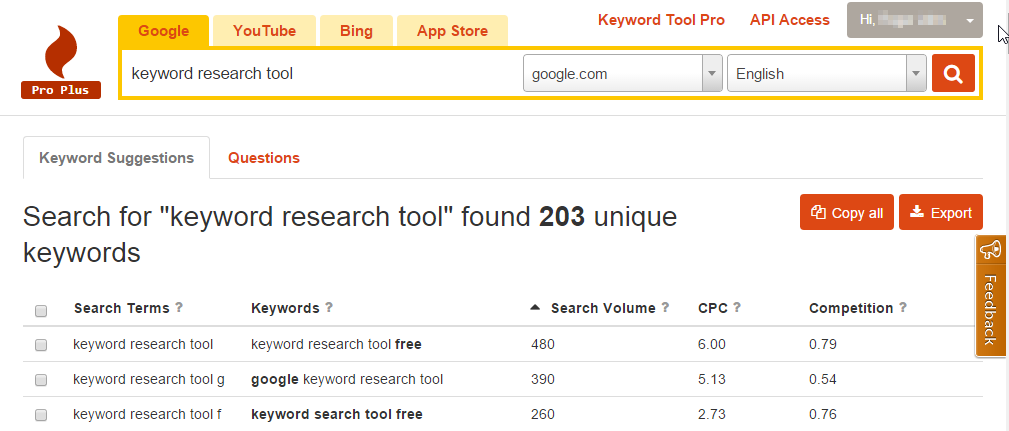
Keyword Tool.io gathers keyword suggestions from search engine autocomplete data. When users begin typing in search engines, autocomplete suggestions appear automatically.
These suggestions reflect real search queries.
Keyword Tool.io collects and organizes these phrases into keyword lists. For example, entering “content marketing” may produce suggestions such as “content marketing strategy,” “content marketing examples,” and “content marketing tools.”
Each suggestion reveals how users expand their searches.
Discovering Long Keyword Chains
Autocomplete tools often uncover long keyword chains that traditional keyword databases overlook.
For instance:
- “content marketing strategy for small business”
- Content Marketing Strategy for B2B Companies”
These phrases represent highly specific search intent. Ranking for them often requires less competition while still attracting targeted traffic.
Because of this capability, Keyword Tool.io complements other free keyword research tools effectively.
Building an Effective Keyword Research Workflow
Successful SEO rarely relies on a single tool. Professionals combine several tools to gather deeper insights.
A simple keyword research workflow might follow these steps:
Begin with brainstorming topics using AnswerThePublic to identify real user questions.
Next, validate search demand using Google Keyword Planner or Ubersuggest.
Then expand keyword variations using Keyword Tool.io.
Finally, analyze real search impressions using Google Search Console.
This layered approach allows content creators to discover keywords from multiple perspectives: search demand, competition, and user intent.
If you want to understand how bloggers use SEO tools beyond keyword research, you can also explore this related guide:
Read also: https://bigtargetmedia.com/best-seo-tools-for-bloggers-complete-guide/
That article explains how bloggers combine SEO tools with keyword strategies to grow organic traffic.
Conclusion
Keyword research forms the backbone of effective SEO. Without reliable keyword data, content creators cannot accurately target search demand or identify ranking opportunities.
The most effective free keyword research tools provide insights into search behavior, keyword variations, competition levels, and user intent.
Tools such as Google Keyword Planner, Ubersuggest, AnswerThePublic, Google Search Console, and Keyword Tool.io help beginners and experienced marketers discover valuable keyword opportunities without expensive subscriptions.
When used together, these tools create a powerful research system that transforms raw search data into actionable content strategies.
Ultimately, consistent use of free keyword research tools allows websites to publish targeted content, attract organic traffic, and build long-term visibility in search results.
